
The Moment You Realize You're Stuck
Power goes out mid-storm, you head to the garage to grab something from the car, and the door won't budge with the wall switch. Someone pulls the red emergency release cord, and now you're both wrestling a swollen, humidity-heavy door by hand while rain hammers the roof. One of you says, "This is exactly why we need a battery backup." The other says, "We've lived here years without one, it's fine." Here's what's actually true, so you can stop guessing.
What a Battery Backup Actually Does
A battery backup is a rechargeable battery pack built into or added onto your garage door opener. It sits there quietly charging off your home's AC power. The moment that power cuts out, it switches over automatically and runs the opener on DC power instead. You don't do anything differently — you press the remote or the wall button exactly like always, and the door opens and closes like nothing happened.
Most backups are rated for somewhere between 20 and 50 open-close cycles before they need recharging, which is plenty to get through a typical outage. They won't run your opener forever, but they're not meant to — they're meant to bridge the gap until power returns or until you can get the car out.
Why This Matters More Here Than in Other Places
In a lot of the country, a battery backup is a nice-to-have. In this part of Florida, it's a different calculation. Hurricane season brings extended outages, and it's common for power to be out for hours while storms roll through in the afternoon. If your garage is also a main entry point to the house — which it is in a lot of homes around here — losing the ability to open that door isn't just inconvenient, it can mean you're locked out or locked in.
There's also the humidity factor. Wood-core and uninsulated steel doors swell slightly in heavy moisture, which means manual lifting takes more force than it would on a dry, mild day up north. Doing that by hand, in the dark, during a storm, with a potentially injured back on the line, is not a great plan B.
When Is It Actually Required?
This is where the argument usually gets settled one way or the other. Modern garage door openers sold in the U.S. are manufactured to UL 325 safety standards, which govern entrapment protection. Separately, some local building codes require battery backup specifically when the garage is the sole means of egress from the home — meaning if there's no other exterior door leading directly outside from the attached garage area, code may require a backup system so residents aren't trapped during a power failure.
Whether that applies to your specific house depends on your home's layout and the code version in effect when it was built or last permitted. It's not a blanket rule for every garage everywhere, and it's not something to guess about from a blog post — it's worth having a technician actually look at your setup and tell you where you stand.
The Real Trade-Offs (For the Argument)
Here's the honest breakdown for whoever's on the fence:
- Manual release cord: Free, already built into your opener, but requires physical effort, doesn't work well on heavier insulated or wind-rated doors, and leaves the door unlocked and vulnerable while the power's out.
- Battery backup: Adds a modest upfront cost (national ranges for retrofit units typically run somewhere in the low hundreds of dollars installed, depending on opener compatibility), but keeps the door motorized, locked, and under normal control during an outage — which matters a lot when you've got afternoon storms rolling through regularly and a door that swells shut when it's humid.
If your household debate is really about safety and convenience during outages versus saving a little money upfront, that's a fair trade-off to weigh — but it shouldn't be confused with a debate about whether it's optional by code, because for some homes it isn't.
When to Call Valrico Garage Door Experts
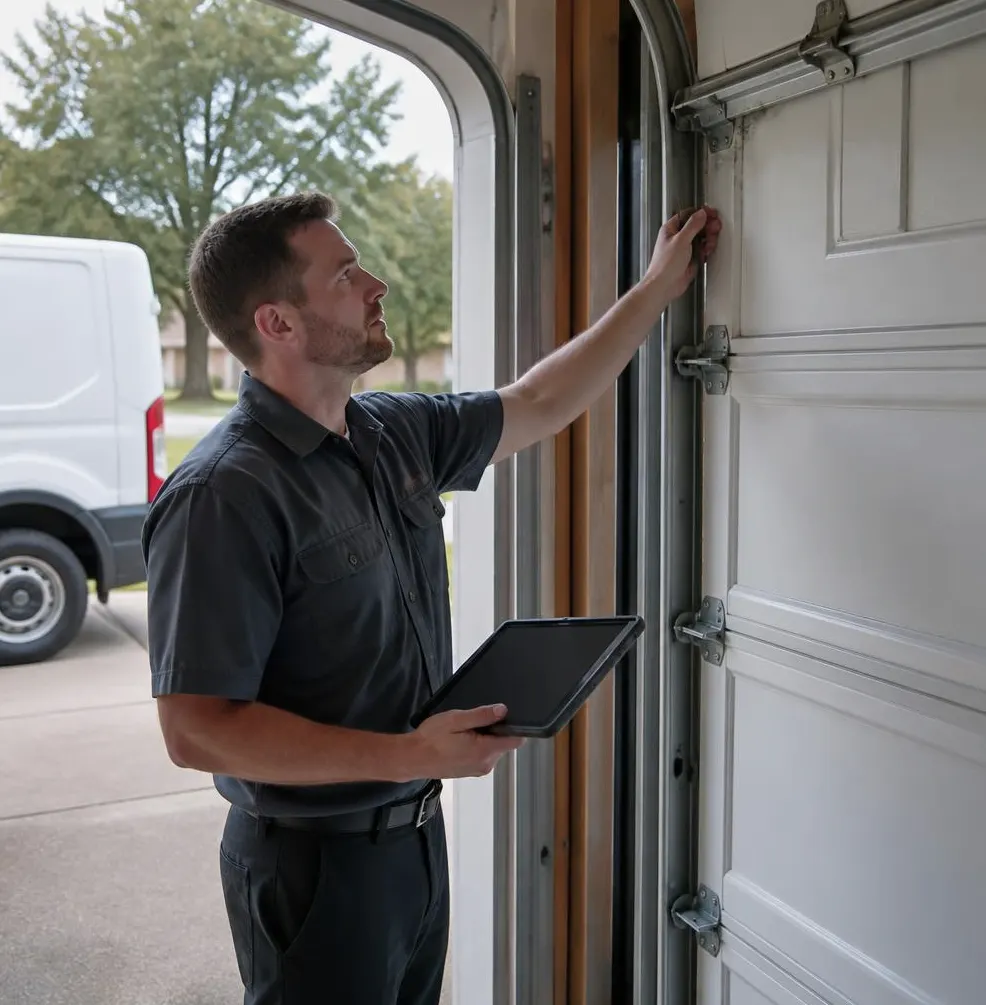
If you're not sure whether your garage qualifies as a sole-egress situation, or if your opener is old enough that it doesn't support a battery backup at all, that's worth a quick visit. Our technicians can check your current opener's compatibility, and if you need a new unit entirely, our Garage Door Opener Installation service includes battery backup-ready models built for Florida's storm patterns. If your real problem turned out to be a door that's swollen, dragging, or off its track — not just the power issue — our Off Track Door Repair and Preventive Maintenance & Tune-Ups services can get the whole system moving smoothly again before the next outage hits.
If you're in Valrico, Brandon, Riverview, Lithia, Plant City, Seffner, Dover, or Fish Hawk and you'd rather have a straight answer than another argument, give Valrico Garage Door Experts a call. We'll check your opener, your door, and your egress setup, and tell you exactly what you need — no guesswork required.