
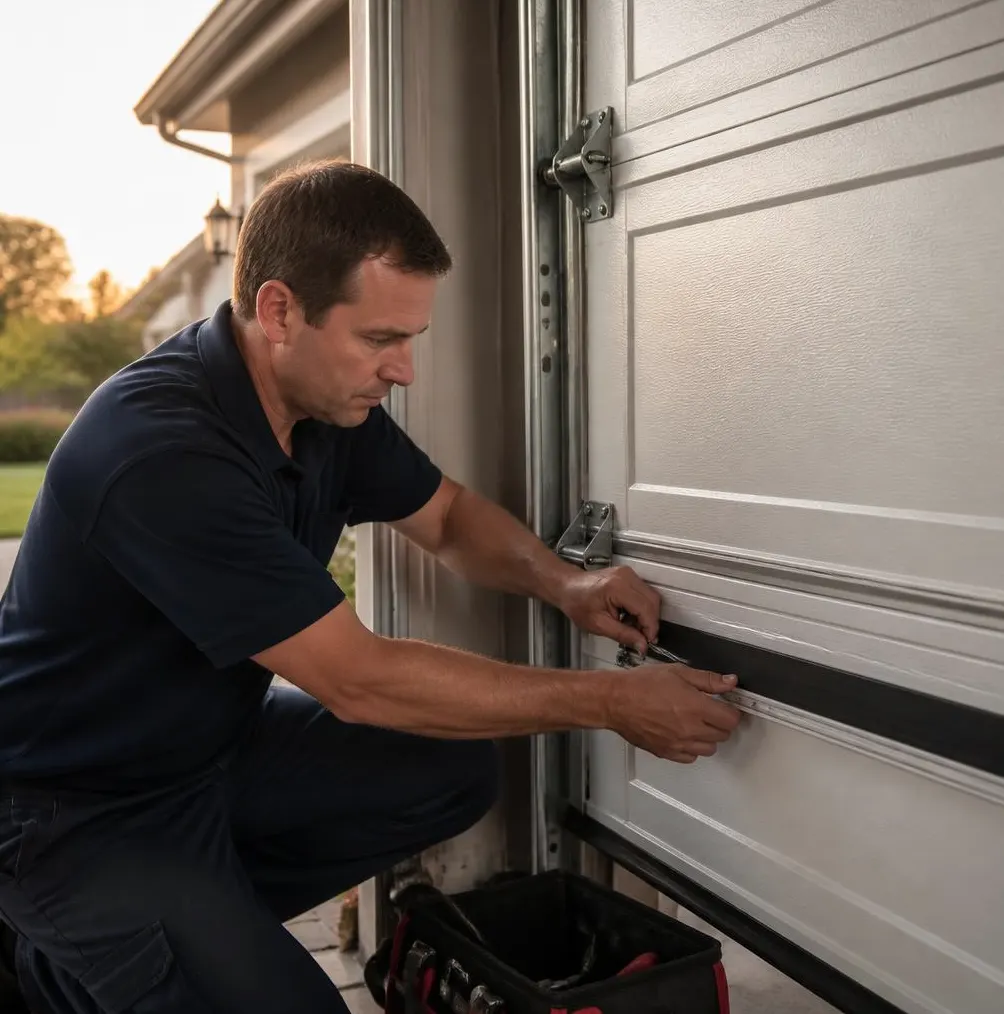
On a typical call this time of year, a technician pulls up right after a line of afternoon storms rolled through with gusty, shifting wind. The homeowner describes a garage door that rattled and visibly bowed during the worst of it, then wouldn't sit flush in the frame afterward. Sometimes a track has pulled a quarter inch away from the wall. Sometimes a panel is dented inward where it flexed past its limit. The opener works fine, the spring is fine — but the door itself wasn't built or maintained to take sustained wind pressure, and nobody found that out until the storm tested it.
The Garage Door Is the Biggest Opening in the House
A garage door is usually the single largest opening in a home's exterior wall, and it's also one of the least reinforced compared to a wall section of the same size. When wind pushes against a house, pressure builds on the windward side and pulls on the others. If the garage door fails — buckles, blows in, or pulls off its tracks — that pressure suddenly has a direct path into the garage, and from there into the attic and roof structure. That's why wind-load ratings for garage doors exist: a door rated and braced for higher wind resistance is stiffer, better anchored, and far less likely to become the failure point that takes the rest of the structure with it.
What Actually Fails First
In most service calls, it's not the door panel material itself that gives out first — it's the supporting hardware. Tracks bolted into aging or swollen wood framing, worn rollers that let the door wander side to side, and horizontal struts that were never installed (or were removed during a past repair) are the usual culprits. A door can look solid sitting still in the driveway and still have almost no resistance to a sustained gust once it's under real pressure.
What Florida Heat and Humidity Add to the Problem
Wind isn't the only thing working against a garage door here. Hot, humid conditions for most of the year, combined with hurricane-season downpours, create their own slow damage that shows up at the worst possible time:
- Rust on hinges, tracks, and bottom panels from repeated wetting and drying, especially on doors that don't get wiped down after storms.
- Swelling around the door frame where wood trim absorbs moisture, which can pull tracks slightly out of alignment without anyone noticing until the door starts binding.
- Corroded cables and springs that lose tension or fray faster than they would in a drier climate.
- Panel warping from heat expansion during the day and rapid cooling when a downpour hits, which over years can leave a door slightly out of square.
None of this causes a dramatic failure on its own, but it chips away at the door's margin — so when a real wind event hits, a door that's already a little rusted, a little loose, or a little out of alignment has much less room to flex before something gives.
A Practical Pre-Storm Checklist
Before the next system is in the forecast, it's worth walking through these checks rather than waiting until wind is already in the yard:
- Inspect the tracks. Look for gaps between the track and the wall bracket, bent sections, or visible rust at the mounting bolts.
- Check for reinforcement struts. Horizontal braces across the back of the door add significant rigidity; if your door doesn't have them, or they've been removed, that's a gap worth closing.
- Look over panels for dents, rust spots, or pinholes near the bottom edge where water collects during heavy rain.
- Test the rollers by opening and closing the door slowly and listening for grinding or watching for wobble.
- Lubricate hinges, rollers, and the opener chain or screw drive to fight the corrosion that humidity causes between storms.
- Verify the auto-reverse safety feature still works — it's unrelated to wind but it's an easy check while you're already looking at the door.
- Consider a bracing kit if the door is older and wasn't installed with wind resistance in mind; it's a cheaper fix than replacing a door that fails mid-storm.
After a storm passes, it's worth a second look — checking for new dents, water intrusion at the bottom seal, or any new play in the tracks before the next round of weather rolls through, which in this part of Florida can be just days away.
When to Call Valrico Garage Door Experts
If a walkthrough turns up loose or rusted tracks, a door that bows noticeably when it's windy, or panels with dents and corrosion along the bottom, that's the point to get a technician out rather than wait. Our Off Track Door Repair service handles doors that have already shifted out of alignment, and Preventive Maintenance & Tune-Ups cover the lubrication, hardware tightening, and reinforcement checks that keep a door performing when wind actually arrives. If a panel or cable has already failed, Garage Door Panel Replacement and Garage Door Cable Repair get the door back to full strength rather than leaving it patched and vulnerable.
Storm season in the Valrico area doesn't wrap up overnight, and a garage door that's been quietly weakened by heat, humidity, and a few hard gusts won't announce it until the next system tests it. If you're in Valrico, Brandon, Riverview, Lithia, Plant City, Seffner, Dover, or Fish Hawk and want a technician to check your door before the next storm rolls in, call Valrico Garage Door Experts today.