
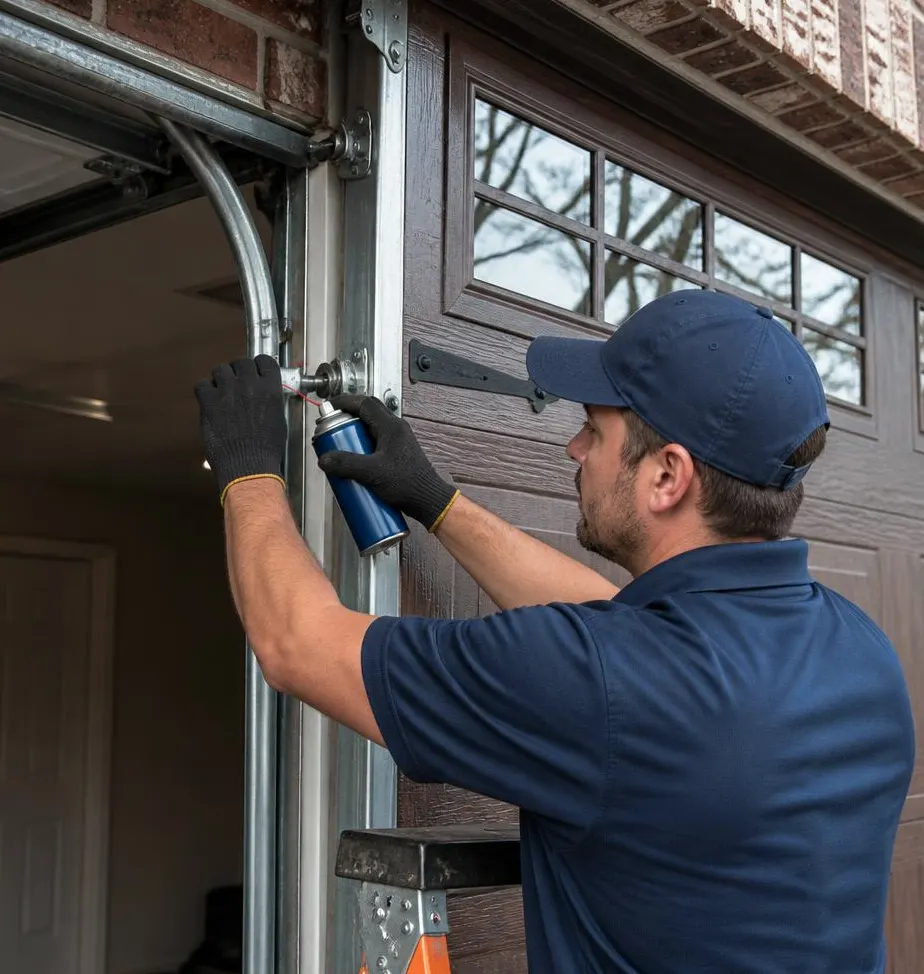
Skip garage door prep this time of year and the bill usually comes due in December or January, right when you've got holiday guests parking extra cars and pulling the door up and down three or four times a day. A spring that's been quietly corroding since July doesn't pick a convenient moment to snap. It picks the moment you're loading the car for a trip or waiting for in-laws to pull in. By then you're not looking at a tune-up, you're looking at an emergency call and a day without a working door.
What Winter Actually Means for a Garage Door in This Area
Valrico doesn't get ice storms or snow load, so a lot of generic winter checklists don't apply here. What you do get is a sharp shift from the thick, wet heat of hurricane season into drier, cooler air, plus the tail end of storm season through November. That swing matters more than people think. Metal parts that absorbed moisture all summer are now drying out and contracting. Wood-composite panels that swelled in the humidity are shrinking back down. Anything that was already a little loose, a little rusted, or a little misaligned tends to show itself once the weather turns.
On top of that, winter in Florida is prime garage-usage season. Holiday decorations go in and out, guests' cars fill the driveway and the garage becomes overflow parking, and families run the opener more often than any other time of year. A door that's barely holding on through summer often fails under that extra wear.
Check for Rust and Corrosion Before It Spreads
Afternoon downpours and heavy humidity are hard on exposed metal, especially the rollers, hinges, tracks, and bottom brackets. Walk the door and look for:
- Orange or reddish-brown flaking on hinges, tracks, or the torsion spring itself
- Pitting on the spring coils (small rough spots where the metal looks eaten away)
- Rust streaks running down the panels below the hardware
Light surface rust on hinges can be cleaned and treated with a rust-inhibiting lubricant. Rust on a spring is a different story. A pitted spring is a weaker spring, and weakness combined with the extra cycles of holiday use is exactly how springs fail without warning.
Inspect Springs Before the First Cold Snap
Torsion and extension springs lose tension gradually, and Florida's humidity-to-dry-air swing accelerates that process. Signs a spring is nearing the end of its life include:
- The door feels heavier than usual when lifted manually
- It opens unevenly or looks crooked partway up
- You hear a loud bang from the garage (often a spring snapping)
- The opener strains or stalls partway through the cycle
Springs aren't a DIY repair. They're under heavy tension and have caused serious injuries when handled without the right tools. If you're seeing any of these signs, this is the time to get it looked at, not after it fails on a Saturday morning with the car trapped inside.
Reseal Against Drafts and Moisture Swings
Weatherstripping along the bottom and sides does double duty here: it keeps out wind-driven rain during the last storms of the season and blocks the drier winter air (and any pests looking for a warm spot) once temperatures drop. Check for:
- Cracked, brittle, or torn rubber along the bottom seal
- Gaps where daylight shows through at the sides or top
- Water staining on the garage floor near the door, suggesting water has been getting past the seal
Bottom seals are inexpensive and straightforward to replace, and doing it now keeps moisture and debris out before the next round of wind-driven rain.
Test the Opener and Safety Sensors
With more people and cars moving through the garage over the holidays, now's the time to confirm the opener is working the way it should:
- Place a 2x4 flat on the ground where the door closes. It should reverse on contact every time.
- Wave a hand in front of the photo-eye sensors while the door is closing. It should stop and reverse.
- Listen for grinding, clicking, or hesitation in the motor that wasn't there before.
Sensors that have drifted out of alignment are a common, easy-to-miss issue, and a door that won't reverse properly is a real safety risk with more kids and guests around.
Check Tracks and Rollers for Binding
As panels and hardware contract slightly in the cooler, drier air, doors that run on worn or slightly bent tracks can start to bind or come off-track. If the door is noisier than usual, jerks at certain points, or looks like it's drifting to one side as it moves, the rollers or tracks likely need adjustment before it gets worse.
When to Call Valrico Garage Door Experts
If you're seeing rust on the spring, a door that feels heavier or crooked, sensors that won't reverse the door reliably, or a track that's binding, it's time to get a technician out rather than keep adjusting it yourself. Valrico Garage Door Experts handles Garage Door Spring Repair and full Preventive Maintenance & Tune-Ups that cover exactly this kind of seasonal wear: lubricating and inspecting hardware, checking spring tension, aligning tracks, and testing opener safety features before the holiday season puts the door to work.
If you're in Valrico, Brandon, Riverview, Lithia, Plant City, Seffner, Dover, or Fish Hawk and your garage door hasn't been looked at since before hurricane season, now's the time. Call Valrico Garage Door Experts to get it checked out before winter use puts the wear to the test.